

24-Hour Sleep: Why Total Daily Sleep Matters More Than Schedules or Wake Windows
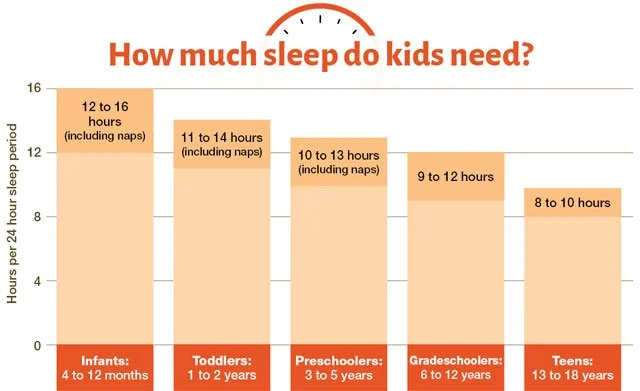
*The American Academy of Pediatrics has issued a Statement of Endorsement of these recommendations from the American Academy of Sleep Medicine.
Most sleep advice focuses on when your child should sleep based on their age.
I focus on how much sleep your child gets across an entire 24-hour period, and how that sleep is distributed between day and night based on age-appropriate guidelines.
This distinction matters more than most parents realize.
What Is 24-Hour Sleep?
24-hour sleep looks at the total amount of sleep your child gets in a full day, including:
Night sleep totals (minus any night waking)
Naps
Sleep is cumulative. What happens during the day affects the night, and what happens overnight affects naps and mornings.
When total sleep is balanced appropriately across the full 24 hours, sleep tends to stabilize naturally.
Why I Don’t Use Wake Windows
I do not use wake windows in my work with families.
Wake windows assume that children of the same age tolerate wakefulness in the same way. In reality, sleep needs vary widely from child to child. We need to calculate how much sleep a child needs before we can determine how much time awake they need to support that sleep.
Relying on rigid timing often leads families to unintentionally shift sleep in ways that work against them, even when they are following advice exactly as written.
Instead of watching the clock, I look at the entire sleep picture. This allows families to support sleep based on biology rather than external rules.
What I See Most Often:
Sleep Is Distributed Incorrectly
Most families with whom I work, the issue is not that a child needs more sleep overall. It’s that their sleep is being distributed in a way that creates conflict between naps, nights, and mornings.
Because sleep is cumulative, adjusting one part of the day almost always affects another.
Here are patterns I see frequently:
When there is too much daytime sleep, night sleep often shortens
When bedtime is poorly aligned, nights may become fragmented or mornings start earlier
When night sleep runs too long, naps often become short or inconsistent
When parents follow externally assigned “wake windows” that are too short or too long for their child, naps and nights frequently suffer in opposite directions
Parents then find themselves chasing schedules they’ve found on social media or Google, which often assumes a child needs more sleep than they can actually achieve. This leads to unrealistic expectations for their child, and schedules that don’t align with their true needs.
This is why I look at sleep across the full 24 hours. Once total sleep is balanced and distributed appropriately between day and night, it becomes more predictable and much easier to support.
What Changes When 24-Hour Sleep Is Right
When sleep is distributed in a way that matches your child’s needs, everything starts to feel more stable.
Parents often notice:
Easier bedtimes
More consolidated night sleep
Longer, more predictable naps
Improved mood and regulation during the day
Less second-guessing, fewer adjustments, and less parental stress and anxiety
Instead of constantly troubleshooting individual issues, families gain clarity around what their child actually needs.
This is the foundation I use with every family I support, from infants through school-aged children.
How to Determine Your Child’s 24-Hour Sleep Needs
There is no universal number that works for every child. Online charts can be a helpful starting point, but they don’t account for individual variability or how sleep is distributed.
That’s why I created a free 24-Hour Sleep Guide to help parents:
Identify their child’s personalized total sleep needs
Understand how naps and night sleep work together
Spot imbalances in sleep distribution
Make realistic adjustments without overhauling daily life
This approach is evidence-based, flexible, and designed for real families.
👉 Download the Free 24-Hour Sleep Guide
If sleep feels unpredictable right now, or you are dealing with short naps, early mornings, or fragmented nights, this guide will give you a clear starting point.
[Download the free 24-Hour Sleep Guide here]
No wake windows.
No rigid schedules.
Just clarity around what your child actually needs.
A Final Word
If sleep feels harder than it should, you are not doing anything wrong.
Sleep challenges are incredibly common, even in families who are thoughtful, consistent, and deeply attuned to their children. Once total sleep and distribution are supported, everything else becomes easier to interpret and adjust.
As I prepare to celebrate 10 years of Expect to Sleep Again, I have more resources coming to support families at every stage.
If there is a specific struggle you want more guidance on, I would love to hear from you. Your questions help shape what I create next.
