
Case Study #4: From Contact Sleep to Crib
How I Helped an 8-Month-Old with Frequent Night Wakings, Contact Naps, and Early Morning Wake-Ups Finally Sleep Through the Night
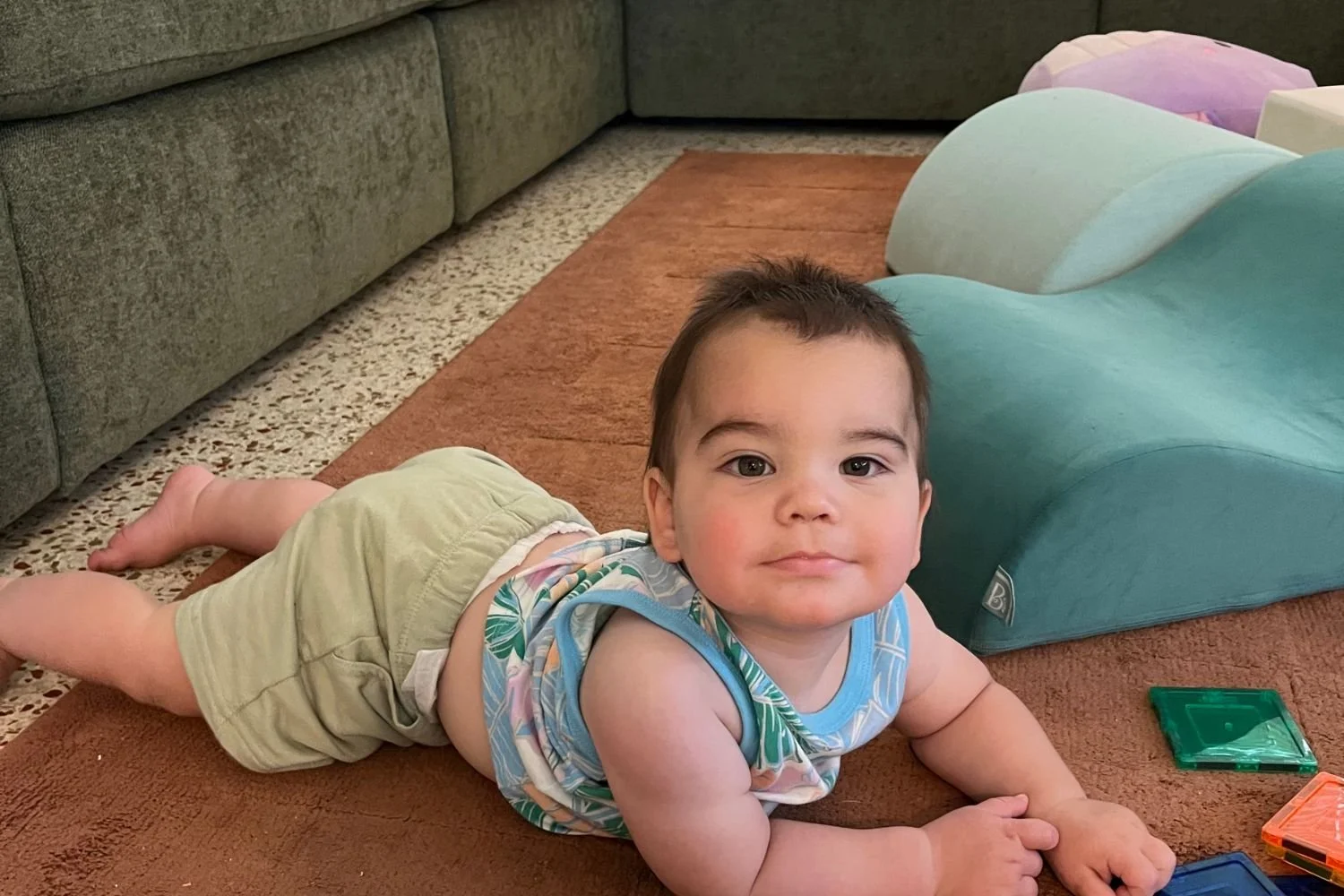
When Carmine's family first reached out to me, they were exhausted. On a good night, their 8-month-old woke every one and a half to two hours. On a bad night, he was up again within thirty minutes of falling back to sleep. He needed to be rocked, bounced, walked, and sung to — sometimes for a long time — before he'd go down. And then he'd wake up the moment he was transferred to his crib.
During the day, he would only sleep on someone. No crib naps. Just contact naps, every single time.
We started with a method. The data came after.
When I begin working with a family, I always screen for medical concerns first including tonsil/adenoid enlargement, chronic ear infections, reflux, sensory sensitivities, and any developmental delays, any of which could be driving the sleep disruption. Once I ruled those out for Carmine, I created a plan starting with a check-and-console approach paired with a rough schedule based on what I know about sleep at this age.
Within the first few nights, things started to shift. Nights were coming together.
Naps were a different story. After two days of crib nap attempts, Carmine was skipping them entirely and getting very upset. I made the call to pause nap training and go back to contact naps temporarily. This isn't failure, it's sequencing. Pushing through naps before nights are solid often means fighting two battles at once, and that rarely ends well for anyone. So we let night’s lead.
The data told us that naps were not aligned with 24-hour sleep needs.
Once I had a few days of real sleep data (actual numbers, not guesses) the picture came into focus. Carmine was averaging about 12 hours of total sleep in a 24-hour period. That's his tank. That's what his body could hold, and no more than that. Attempting to get him more than that was making sleep worse, not better.
Here's what made Carmine's case interesting: on days when his naps were longer, his nights were worse. More daytime sleep meant more night wakings. At first glance that seems counterintuitive, shouldn't more sleep mean better sleep (sleep begets sleep is what you always see on social media!)? But when you understand the 24-hour framework, it makes perfect sense. His tank only holds 12 hours. Fill it up during the day, and there's less room at night.
That insight gave me the ceiling on daytime sleep. And once I had the ceiling, I could build a better schedule.
The 24-hour framework isn't just a number. It's a budget. Every hour of sleep Carmine got during the day was an hour he wasn't going to spend sleeping at night.
The schedule that looked wrong — but wasn't.
Here's where it got interesting for Carmine's mom.
The schedule I landed on looked different from what she'd seen online or even read in the books. Most resources for eight-month-olds suggest wake windows of around two to three hours. Carmine needed four. Two naps, each capped at one hour, at 10:00am and 3:00pm. Wake time 6:00am. Bedtime 8:00pm. Ten hours overnight.
That's a longer wake window than most parents expect at this age. And when I presented it, mom was nervous. It seemed like too much awake time. Everything she'd read pointed to shorter time awake.
But his data said otherwise. Shorter wake windows meant he wasn't tired enough for a quality nap. Longer naps meant worse nights. The schedule that looked wrong on paper was exactly what his sleep tank required.
Once we landed on it, things moved quickly. By the end of the first week, nights were solid. We reintroduced crib nap training, and with the right wake windows in place, naps came together too.
Carmine is now sleeping through the night, taking two one-hour naps, and getting ten hours of overnight sleep. His parents have their evenings back. And his mom told me she wishes someone had explained the 24-hour picture to her from the start.
What I want you to take from this.
The method mattered. Check-and-console gave Carmine's family a way to support him through learning a to fall asleep independently. But the method alone wasn't what made it work. What made it work was knowing his actual sleep needs, which felt different than age-based wake windows online.
Most sleep advice skips that step. It goes straight to method, straight to routine, straight to what to do at bedtime. The 24-hour picture gets left out entirely. No method will work without an understanding of a child’s individual sleep needs.
That's where I start with every family. And it's what changes everything.
→ Start with the free 24-Hour Sleep Guide.
→ If you’re still stuck, check out my 24-Hour Sleep Power Hour offering. We’ll work through your child’s needs and create a plan to get things on track!
