
Sleep Deprivation and Maternal Mental Health: Why I Became a Sleep Consultant
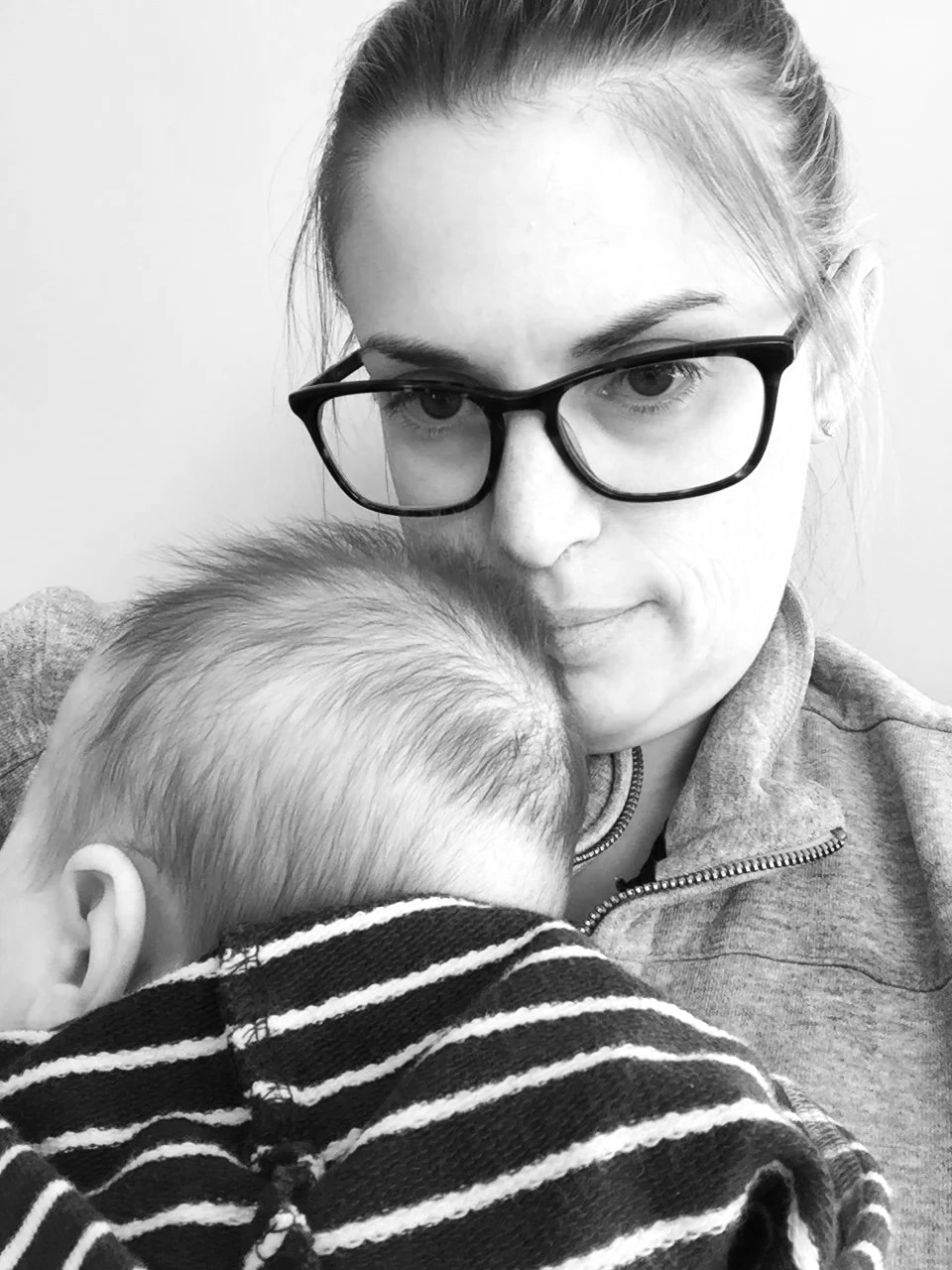
May is Maternal Mental Health Awareness Month, and it feels like the right time to come back to this story, especially now that I can see it more clearly than I could ten years ago.
People often ask how I became a sleep consultant, and for a long time I gave the easy answer. My baby didn’t sleep so I hired a sleep consultant and it was life changing. And while that’s true, it barely scratches the surface of what was actually happening during that time in my life.
What I didn’t fully understand then, but can name now, is that I was really struggling with my mental health after becoming a mom. I just knew I felt overwhelmed and completely exhausted in a way that didn’t feel normal, even for new motherhood.
This wasn’t the kind of tired that comes after a long week or a few rough nights. This was the kind of exhaustion where everything feels heavy, where you find yourself crying in the bathroom and wondering how you’re going to keep doing this day after day.
My delivery and recovery were complicated, and I wasn’t physically well for weeks. At the same time, I had a baby who needed to feed constantly, and I remember feeling like I had no control over my body, my time, or my thoughts. Everything felt like it was happening to me, and I had no control.
Looking back, I can see that I was in the middle of a perinatal mental health crisis, but at the time, no one really helped me connect those dots. I wasn’t screened in a meaningful way, even with a history that should have warranted more attention. So much of it was left up to me to figure out while also caring for a newborn and trying to function in a completely new reality.
Those first few months felt like survival mode. I didn’t want visitors, I wasn’t enjoying motherhood the way I thought I would, and that brought with it a layer of guilt that made everything feel even heavier. I was trying to get support, but between therapy, books, and well-meaning advice, nothing felt clear or actionable in the state I was in. I didn’t have the energy to process information or piece together a plan.
What I needed, more than anything, was sleep.
We now understand so much more about the connection between sleep deprivation and conditions like postpartum depression and postpartum anxiety, but even then, I could feel that something wasn’t right. The lack of sleep was making everything harder to navigate, harder to process, and harder to recover from.
Hiring a sleep consultant ended up being the turning point for me, not because everything suddenly became perfect, but because it gave me something I didn’t have before, which was a clear path forward. We found a rhythm to our days, a plan I could follow without second-guessing every decision, and as my daughter’s sleep began to improve, mine did too.
The best way I can describe it is that the fog started to lift. I could think more clearly, I could breathe again, and I began to feel like myself in a way I hadn’t in months. Along with that came a sense of confidence as a mom that had been completely missing, and that shift changed everything for me.
So yes, I became a sleep consultant because my daughter didn’t sleep well, but the deeper truth is that I became a sleep consultant because I know what it feels like to be a struggling mom who is completely depleted and trying to hold it all together. I wanted to be the person I so desperately needed during that time.
Over the years, that perspective has only deepened. Sleep is never just about sleep, especially during pregnancy and postpartum. It’s connected to mental health, to identity, to how you move through your days and how you experience motherhood as a whole.
That’s a big part of why I recently completed my Perinatal Behavioral Health Coach certification through FamilyWell Health. I wanted to be able to support moms more fully during this phase, not just with sleep, but with the very real mental and emotional load that comes with it.
If you are in this season right now and feeling overwhelmed, please know that you are not meant to do this alone. There is real, evidence-based support available for both your mental health and your sleep, and getting help can change more than just your nights.
Resources:
Postpartum Support International (PSI): Call or text 1-800-944-4773 (EN/ES)
National Maternal Mental Health Hotline (U.S.): 1-833-943-5746
If you are in immediate crisis, call or text 988
And if sleep is part of what’s making everything feel harder than it needs to be, I’m here to help with that too, because I’ve been there, and I know how much lighter things can feel on the other side. You’re not alone, and you don’t have to figure it out on your own.
